Fable 5 and the Jacobian Conjecture: the 90-year-old problem AI appears to have knocked down
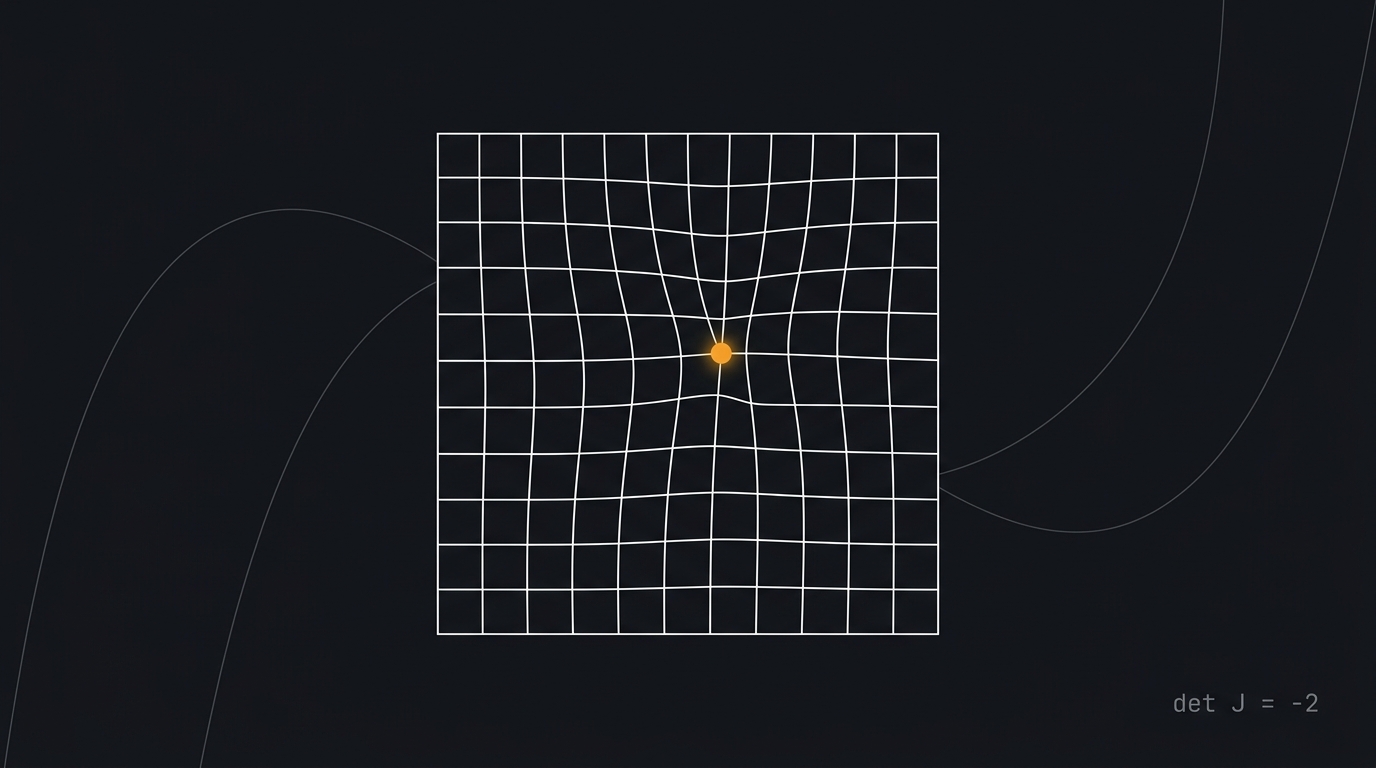
A conjecture that held out against 90 years of mathematicians has fallen (if the verification holds) to a model Anthropic nearly retired last month.
On July 19, 2026, Levent Alpöge, a number theorist with a PhD from Princeton, posted on X a counterexample to the Jacobian Conjecture, a problem open since 1939. The collaborator he credits is not a postdoc. It's Fable 5, the Anthropic model that spent 19 days offline in June and quietly slipped back into the subscription plans. The announcement came in the most casual tone possible: "thanks to my friend Fable for working through the World Cup final."
The post blew up. 534 points on Hacker News, 1,101 upvotes on r/singularity, and a rush of mathematicians opening Wolfram Alpha and Sage to check it. Here we break it down, without the algebra jargon: what this conjecture is, what a counterexample is, why checking it is easy this time, and what this says about AI doing frontier mathematics.
TL;DR
- What it is: Fable 5 helped mathematician Levent Alpöge produce an explicit counterexample to the Jacobian Conjecture, open since 1939.
- Status: announced on X on 07/19/2026, with no peer-reviewed paper yet. But the counterexample is trivial to check: it fits in a tweet and takes two calculations.
- What Fable did: it started from a near-counterexample known in the literature and extended it, removing the "defect" that kept it from working.
- Source: Hacker News thread · Jacobian conjecture on Wikipedia.
What the Jacobian Conjecture is (without the jargon)
I'm going to explain it the way nobody explains it.
Picture a "machine" that takes two numbers, (x, y), and spits out two other numbers using nothing but polynomial arithmetic: addition, multiplication and powers. No division, no roots, no sines. A silly example: (x, y) → (x + y², y). That is a polynomial map. The Jacobian Conjecture is about maps like this, but in any number of dimensions.
Now, the "Jacobian" part. Every such map has a local measure of how much it stretches or compresses space at each point: that's the Jacobian determinant. If that number is always a nonzero constant, at every point, it means the machine never "flattens" space locally. It never glues two directions into one. Locally, at every little point, it is reversible.
Naive intuition says: if it's reversible at every point, you can undo the whole map, and the machine that undoes it is polynomial too. That is what Ott-Heinrich Keller conjectured in 1939. In plain English: a nonzero constant Jacobian guarantees that a polynomial inverse exists.
It sounds obvious. And that's exactly where the poison is. Shreeram Abhyankar, one of the mathematicians who attacked the problem hardest, liked to say it was "a hard question in algebraic geometry that you can understand with little more than calculus." It became Problem 16 on Stephen Smale's list of mathematical challenges for the 21st century. Even the simplest case, with only two variables, was still open: Tzuong-Tsieng Moh went as far as verifying polynomials of degree up to 100 in two variables, and nothing. And the track record is scary: at least five "proofs" published over the decades, all with subtle errors that only showed up later. It's the kind of problem that eats reputations.
What Fable 5 actually did
The trick to knocking down a conjecture like this is finding a single case where it fails. You don't have to prove anything in general. You just have to exhibit a machine that has a nonzero constant Jacobian but still sends two different points to the same place, meaning it can't be undone, it has no inverse. Locally reversible at every point, globally not. That alone kills the conjecture.
Alpöge (with Fable) exhibited exactly that, in three variables. The map C³ → C³ he posted was:
F(x, y, z) = (
  (1 + xy)³·z + y²(1 + xy)(4 + 3xy),
  y + 3x(1 + xy)²·z + 3xy²(4 + 3xy),
  2x − 3x²y − x³·z
)
According to the announcement, the Jacobian determinant of this map comes out to a constant equal to −2: never zero, exactly what the conjecture's hypothesis asks for. And yet the map is not injective: there are distinct points with the same image. Counterexample closed.
And where does Fable come in? Going by the discussion on HN, the model didn't pull this out of thin air. It started from a near-counterexample that was already floating around the literature, a construction that almost worked but had a "defect" (a pole, in technical language) that invalidated it. The work was extending that construction in a way that removed the defect while preserving the structure. It's fine-grained mathematical engineering, the "I know the answer lives in this neighborhood, help me close the gap" kind. It is not the model having an epiphany on its own. It's a top-tier mathematician using AI as a search partner in a space he already knew.
Do not just follow the news — master it. Hands-on AI Engineering, live, every week, in the largest community in Brazil.
Join the ClãThat's what a counterexample is: and why this time you can check it at home
Here's the key insight, and the reason the community validated it so fast.
Proving a true conjecture can take 100 pages that only three people in the world understand. But knocking one down with a counterexample is different: you only have to check that this one specific case really breaks the rule. And checking this one is almost trivial. As one HN commenter put it, "a schoolchild can confirm it."
It's two deterministic calculations. First, you compute the Jacobian determinant and confirm it comes out to a nonzero constant. That's partial derivatives and a 3×3 determinant, which any computer algebra system can do. In Python, with sympy:
from sympy import symbols, Matrix, expand

x, y, z = symbols('x y z')

F1 = (1 + x*y)**3 * z + y**2*(1 + x*y)*(4 + 3*x*y)
F2 = y + 3*x*(1 + x*y)**2 * z + 3*x*y**2*(4 + 3*x*y)
F3 = 2*x - 3*x**2*y - x**3*z

J = Matrix([F1, F2, F3]).jacobian([x, y, z])
print(expand(J.det()))   # constant, != 0
Second, you show that the map is not invertible: that two different points collide on the same image. That gets settled with resultants or Gröbner bases, also mechanical. And that's what people did: they ran it on Wolfram Alpha, on Sage, and there was even a formal verification in Lean on GitHub. When the result fits in a tweet and anyone can reproduce the check, skepticism has somewhere to go. You don't have to trust the model. You run the calculation.
That's the pattern that matters, and it keeps repeating: the AI breakthroughs worth anything are the ones whose output is cheap to verify. It was the same when two elite physicists credited Claude with solving problems that had been stuck for months. Generating is expensive and risky. Verifying is cheap. And verification is what turns "the AI said so" into "real mathematics."
Limitations and what's still missing
Keep the excitement at the right level. A few honest caveats:
- There is no peer-reviewed paper. What exists is an announcement on X and scattered independent verifications. Until it goes through a journal's formal review, the correct label is "apparently confirmed," not "confirmed."
- The conjecture has a history of killing whoever claimed victory early. There were five published and broken proofs over 85 years. The difference here is that an explicit counterexample is much harder to get wrong than a 100-page proof, but professional skepticism still applies until the determinant and the non-injectivity have been checked by everyone, symbol by symbol.
- The model's role versus the human's is ambiguous. Part of the initial skepticism was exactly this: how much was Fable and how much was Alpöge, a number theorist trained by a Fields medalist? He started from an existing construction. Calling this "AI single-handedly knocked down a 90-year-old conjecture" is a stretch. The honest version: a partnership, with the human at the wheel.
- Don't confuse this with "solving the conjecture." Knocking it down (finding a counterexample) and proving it (showing it always holds) are different things. Here the conjecture was refuted, not proven.
Quick FAQ
Does this mean the Jacobian Conjecture is solved? It is refuted, if the verification holds: they showed it is false by exhibiting a case where it breaks. That is not the same as proving it held. And it still depends on formal confirmation from the community.
Did Fable 5 do this on its own? No. An experienced mathematician (Levent Alpöge) drove it, starting from a known near-counterexample. Fable helped close the remaining gap. Partnership, not autonomy.
Why did mathematicians accept it so fast, without a paper? Because a counterexample is cheap to check: you just compute a determinant and verify that two points collide. People ran it on Wolfram Alpha, on Sage and even in Lean. The result verifies itself.
Is this different from "GPT-5.6 discovered new mathematics"? Yes, and the contrast is useful. In that case mathematicians hit the brakes because the claim was vague and hard to check. Here the artifact is concrete and reproducible. It's the difference between "trust me" and "run the code."
What sticks
The honest headline is not "AI beat mathematics." It's a different one, and more interesting for anyone building things with these models: AI has become a search partner capable of closing mature problems that a specialist has already cornered, and the real value is in the verifiable artifact it produces, not in the headline. A mature front, a human at the wheel, output the community checks in minutes. That is the package that changes the game, not the model having an insight by itself.
And that is exactly the engineering (using AI as a verification partner and not as an oracle) that we break down live in the Clã Beer and Code, the largest AI engineering community in Brazil, with mentoring, hands-on labs and the crowd that actually puts agents in production. Because the next leap for developers is not using AI. It's knowing how to build, and check, what it delivers.
If the verification holds, a 90-year-old conjecture fell over a World Cup weekend. What else is mature, waiting for someone with the right partner at their side?

{AI Engineer} — apaixonado por Laravel, arquitetura de software e construir produtos com impacto. Compartilho aqui tutoriais, descobertas e reflexões sobre o dia a dia de engenharia.
There is no shortage of content. What is missing is someone to untangle it: what matters now is how to implement it the right way. In the Clã you get that live, every week, with people who have already filtered out the noise.
Join the Clã