Claude Code stopped cloning games: what AI has already done with reverse engineering and why Anthropic hit the brakes now
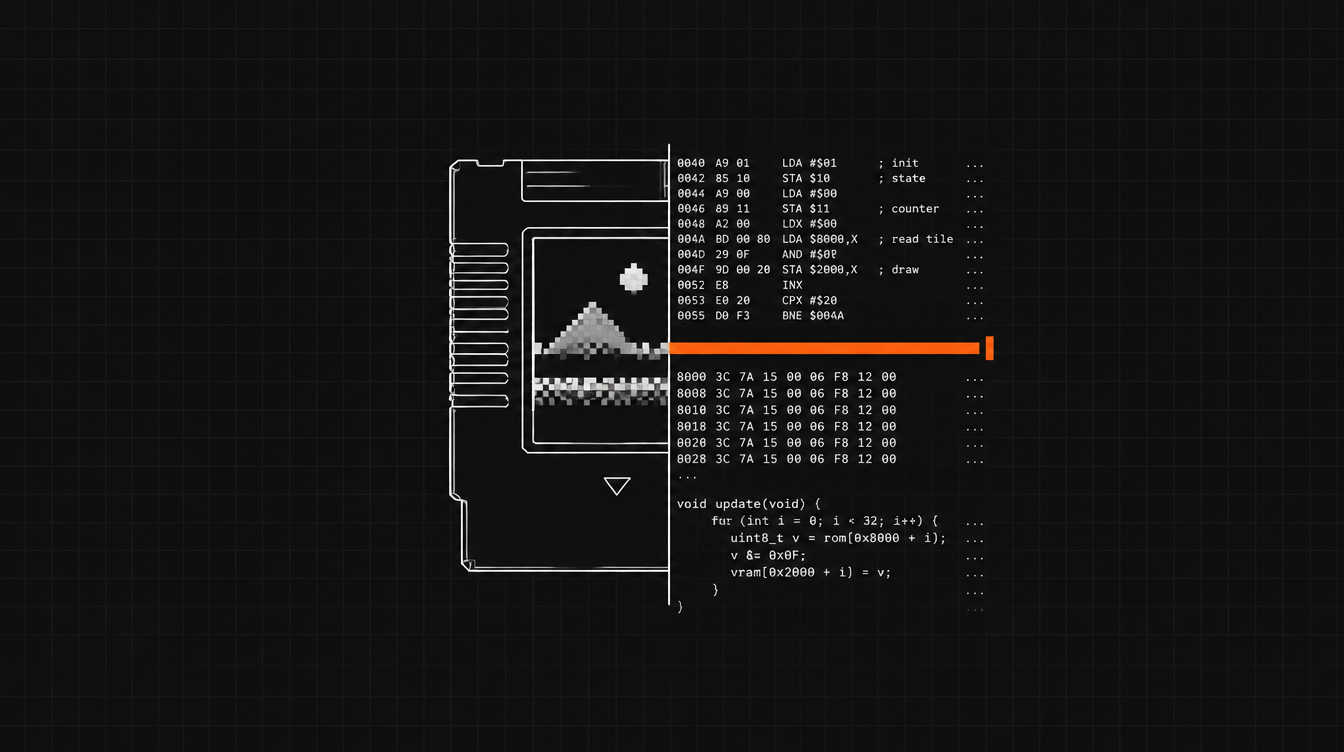
In October, AI got so good at taking games apart that the main hub of the decompilation community shut its doors.
Two weeks later, Anthropic told Claude Code to stop recreating other people's games. No announcement. Just a flag hidden in the prompt.
Claude Code's new rule for games is short, confirmed by Anthropic itself, and a lot narrower than the panic on X suggests. But it didn't come out of nowhere. It's the tip of a year in which coding agents started doing, in weeks, reverse engineering work that used to take volunteers years.
In this post we do three things: separate what's confirmed from what's just user reports, walk through everything AI has already done with game reverse engineering and the damage it caused in the market, and explain why the brakes came now. At the end, what you can still do with Claude Code without hitting the wall.
TL;DR
- What it is: two sentences added to Claude Code's prompt (running Opus 5.5) telling the model not to recreate a specific existing game, even if renamed. Internal flag:
tengu_heron_brook. - Confirmed: Anthropic confirmed the change on October 30, 2026 and pointed to the usage policy on intellectual property infringement.
- Still allowed: original games, genre games, games built from your own designs and assets.
- Reported, not confirmed: refusals on generic reverse engineering. The confirmed rule targets recreation, not decompilation.
- Why now (our read): IPO on the horizon, a model that's too good at cloning, and studios canceling playtests out of fear of copies.
What Anthropic confirmed (and what's just user reports): the tengu_heron_brook rule
Let's start with the facts.
Around October 27, 2026, a new instruction started reaching Claude Code from Anthropic's servers. It wasn't in the installed package: it came via remote config, under the internal flag tengu_heron_brook, according to Crypto Briefing. On October 30, 2026 the text also showed up in the package for version 2.1.314, and an X user named Chasm posted the full instruction. He also pointed out there's no setting to turn it off.
The reported text, per 1023 Jack's write-up based on Game Developer:
Do build original games, games in a genre, and games from the user's own
designs and assets. Don't build a recreation of a specific existing game,
even if it is renamed or called original.
On the night of October 30, 2026, Anthropic confirmed it. A spokesperson pointed Game Developer to Addy Osmani, from the company's technical staff, who said two sentences were added to the prompt for Opus 5.5, because using Claude to infringe intellectual property is already prohibited by the usage policy. He also said the company will keep iterating to get the balance right.
Notice three details.
First: the ban isn't new. Infringing IP with Claude has always been against the policy. What changed is that Claude Code itself now enforces it at request time.
Second: it's prompt text, not a technical block. No dedicated classifier, no list of banned games. It's a natural-language instruction, and natural-language instructions have variable adherence. The same request can go through in one session and get refused in the next. We've seen this movie before when Anthropic cut 80% of Claude Code's system prompt: the agent's behavior changes server-side, without you updating anything.
Third: it's not in the usage policy update that takes effect on November 12, 2026, according to Crypto Briefing. It's a product rule, not a new contractual rule.
Now, what's reports, not facts.
The Tom's Hardware headline says users "also claim" blocks on generic reverse engineering tasks unrelated to games. There are reports from people using REA, an open source tool that connects agents to Ghidra and IDA, complaining about responses getting cut off mid-way. A tabletop wargame studio opened a GitHub issue saying legitimate work was refused.
None of these cases has been provably tied to the games rule. Responses interrupted mid-way through a reverse engineering task look more like Opus 5.5's cybersecurity classifier than a prompt instruction. And in the other direction: in the tests cited by 1023 Jack, Opus 5.5 kept helping decompile a game from the user's own copy.
Honest summary: the confirmed rule targets recreating someone else's game. Decompilation isn't in the text. If you got a refusal on reverse engineering, it could be a false positive of the rule, it could be another guardrail, it could be session variance. Nobody has proven which.
Everything AI has already done with game reverse engineering: matching decomp, ports, and the end of decomp.dev
To understand the brakes, you need to understand the accelerator.
What matching decompilation is
"Matching" decompilation is the gold standard of game preservation. You rewrite the game in C, function by function, until compiling that C with the original compiler from the era produces exactly the same bytes as the cartridge binary. Not "close". Identical.
That's why it's always been brutal work. Every function turns into a puzzle of register allocation, instruction order, and compiler quirks. An average game project took years with several volunteers.
Then coding agents showed up. And the loop they run is perfect for AI:
1. take the simplest function that doesn't match yet
2. write an attempt in C
3. compile it with the original compiler (e.g. IDO 5.3 on the N64)
4. compare it with the binary and compute the % match
5. if < 100%, read the diff and go back to step 2
6. if = 100%, commit and take the next function
It's a problem with automatic, objective verification. Exactly the kind of task where agents shine: cheap trial and error, binary success criteria. Chris Lewis documented this loop in detail on his blog, running the agent in headless mode function by function.
The scoreboard up to October
Capital and Compute's verified survey, from October 11, 2026, lists three commercial games with 100% matching and AI help:
| Game | Platform | Functions | Context |
|---|---|---|---|
| Super Smash Bros. Melee | GameCube | 19,828 | Repo from 2020, closed out in September 2026; AI helped in the home stretch |
| Snowboard Kids 2 | N64 | 3,013 | 596 days, AI from late 2025 |
| Snowboard Kids | N64 | 2,119 | 84 days |
Look at the last row. The same author took 596 days on the first game and 84 on the second, as Gigazine summarized. A seventh of the time.
But read the fine print, because it matters for the rest of this post. On Melee, humans did most of the work over six years. On the Snowboard Kids games, there was heavy prompt engineering, a learnings file about compiler quirks shared across agents, and help from experienced people in the community. Lewis himself says "vibe coding" is far from viable for matching decomp. And matching isn't the same as readable: in the Super Mario 64 DS decomp, 99.9% of functions match, but only 31.5% of the code is readable.
Academic research points to the same caveat. The paper When LLM Decompilers Recompile More and Preserve Less, from September, shows that refining Ghidra output with an LLM raises the compilation rate from 75% to 90%, but the rate of behavior identical to the original drops from 74% to 62%. The code compiles more and preserves less.
Ports and "slopcomps"
On the other side are PC ports. That's not decompilation: it's static recompilation or recreation, and that's where vibe coding came in with no brakes.
In early October, Kotaku covered the war between the devs of Zelda: Recompiled and Banjo: Recompiled, human projects with an explicit "no AI" policy, and a Banjo-Tooie port generated entirely by AI. The nickname that stuck was "slopcomp". The criticism: untested ports, full of bugs, patching the wrong side of the code, and drowning human work in visibility.
The end of decomp.dev
In mid-October, decomp.dev, the index and scoreboard that tracked progress on decompilation projects, announced it's shutting down. 404 Media reported it on October 15, 2026.
The admin, who goes by Encounter, didn't give an anti-AI speech. Quite the opposite: he wrote that "with the right guidance, human input, and code reviews, AI can expedite the decompilation process in a significant way." The problem was something else. Hostile forks of other people's projects to finish them with AI, low-effort drive-by contributions, half-baked ports rushed out to grab credit before the humans. And it became impossible to tell human projects from AI projects. In the line that made the headline: "the community aspect of decompilation has been broken".
The main index and new project registration go offline. Project pages and history stay up.
This is the point that separates a tool from a craft. The agent that did Snowboard Kids in 84 days had someone who understood compilers, designed the verification loop, and reviewed the result. The agent that generated the slopcomp had someone in a hurry. Vibe coding solves the Saturday prototype; turning that into engineering that survives review is a different game, and it's what we train every week in the Clã Beer and Code.
This week's signal
And the frontier keeps moving. On October 30, 2026, a Show HN with 278 points showed off nesformer: a NES CPU "compiled" into the weights of a regular Qwen3.5, with the model predicting the processor's execution token by token. It's not a game clone, it's a research experiment. But it shows the mood: the question stopped being "can AI do it?" a long time ago.
The market impact: clones in hours, studios postponing playtests, and what still has no data
Decompiling an N64 game for preservation is one thing. What scares the market is something else: taking a new game, still in demo, and cloning it before launch.
On October 19, 2026, Digital Sun, the studio behind Moonlighter, dropped ReVamp's public Steam playtest and moved testing to a smaller group on Discord, starting October 29, 2026. The game launches in March 2027. Digital Sun said it was concerned about recent news of games being reverse engineered, cloned, and published before the original even came out, and that, with launch still months away, a large public build of ReVamp felt like too big a risk.
The studio also pointed to what explains the size of the damage: showing a game early is how indies get seen and find the fans who sustain them. The same week, according to the coverage, the Drunken Goddess Reflux demo was pulled from Steam Next Fest over the same fear.
An honesty caveat: Digital Sun's statement doesn't mention AI. The press is the one tying the decision to AI. Does it make sense? It does. 404 Media talks about cheap clones made "in just a few hours". But it's inference, not a statement.
The economic reasoning is simple, and a comment on Hacker News nailed it: cloning takes almost no effort, creating something new is orders of magnitude slower and riskier. Copying what's already proven to work is less risky. So, almost by definition, you should expect far more clones than new games.
To close this section with what we don't know:
- There's no sales data showing publishers losing revenue to AI-made clones.
- There's no market share number for clones in the stores.
- There's no data on how many studios canceled demos for this reason beyond the cases cited.
The impact measured so far is behavioral: studios hiding games, communities shutting down, port devs fighting port devs. It's a strong signal, but it's a signal, not a statistic.
And a warning about what's going around the forums: the idea of a "clean room with two AIs", where one decompiles and writes the spec and the other implements without seeing the code, is a forum suggestion. It's not a legal position, it has no tested precedent, and it doesn't protect you from anything.
Do not just follow the news — master it. Hands-on AI Engineering, live, every week, in the largest community in Brazil.
Join the ClãWhy now: the S-1, IP risk, and a model too good at recreating
This is where analysis comes in. What follows is our read, not a statement from Anthropic. The company only cited the usage policy. But the timing speaks.
1. The S-1. On October 26, 2026 Anthropic filed its IPO prospectus. We read the document and the part that matters here is this: 5% to 7% of revenue for the nine months through September 30, 2026 came from customers violating the usage policy or terms, and the company says it has stepped up enforcement. A company heading to the stock market doesn't want a "Anthropic tool clones Nintendo game" headline during roadshow month. IP risk becomes investor risk. The rule landed one day after the S-1.
2. The model got too good. Cloning games with AI isn't new. The difference is that with Opus 5.5 the viral case stopped being "look at this Flappy Bird" and became recreating a commercial game in a single session. When a capability goes from demo to product, the legal risk changes category.
3. Industry pressure. Decomp.dev shutting down, studios canceling playtests, the ports community in open war. All in October. Anthropic didn't cite any publisher complaint or lawsuit, and nobody has shown there was one. But the environment was asking for a gesture.
4. It's the cheapest gesture possible. Two sentences of prompt, delivered remotely, without changing the usage policy and without training anything. It can be adjusted tomorrow. For a company that wants to show responsibility without losing its dev audience, it's the obvious tool.
What the Hacker News debate picked up on
The HN thread on the topic raised four points that apply to any dev:
- Rented intelligence. "That's what happens when you rent your intelligence from someone else." The rule changed server-side, no changelog, no opt-out.
- Expiration date. One commenter's bet: it works for about a year, until open models catch up, and then it's a free-for-all. His proposal is to invest in clone-resistant reputation systems, not in blocking.
- Migration. Reverse engineers will move to ChatGPT and, if that closes too, to Chinese models. As of October 31, 2026 no equivalent game-specific rule had shown up at OpenAI or Google, according to 1023 Jack.
- Asymmetry. "But copying Ghibli style is still allowed." The criticism is that the software industry protected its own and left illustrators and artists behind. It's debatable, but the discomfort is legitimate: style isn't protected by copyright, a specific game is. The legal line explains the difference; it doesn't necessarily justify it.
We tend to agree with the expiration-date diagnosis. A prompt instruction won't stop someone who wants to get around it. It stops the distracted dev and keeps Anthropic from being an accomplice in the easy case. Which is probably the whole point.
Claude Code and games: what you can still do (and where the line actually is)
If you use Claude Code for games, almost nothing changes. The rule targets a narrow target.
Still fine:
- Original games.
- Genre games: roguelike, metroidvania, tower defense, 2D platformer.
- Games from your own design and assets.
- Mechanics study: "how does the combo system in a fighting game work".
What the model should refuse:
- "Recreate game X."
- "Make a clone of X, but call it Y."
- "Copy the levels, characters, and rules of X."
The difference is in how you phrase it. A request that names a specific game as the target of a copy triggers the rule. A request that describes mechanics, genre, and your own design decisions doesn't.
Compare:
# likely refused
Recreate Vampire Survivors in Phaser, with the same weapons and the same map.

# within the rule
I want a top-down, wave-based survival roguelite in Phaser.
Mechanics: auto-attack, XP dropped by enemies, pick 1 of
3 upgrades on each level-up. The sprites are in /assets (made by me).
The theme is a medieval kitchen: the player is a cook, the enemies
are rotten ingredients. Start with the wave loop and enemy spawning.
The second request is better either way. It gives context, constraints, and identity. That's how you talk to an agent when you want software that doesn't feel generic.
If you have a legitimate use case and got refused, two practical tips. Make it explicit in the context that the assets and design are yours. And if it's genuinely a false positive, report it: Anthropic has said publicly it wants to tune the calibration. There's no flag to turn it off, and trying to trick the model with "it's just a similar original game" is exactly the case the rule's second sentence anticipates.
Preservation decomp is not a commercial clone
Finally, the distinction that matters most and that got most lost in the discussion.
Decompilation for preservation rebuilds the code of an old game, often abandoned by its owner, and only works with your copy of the game: the repo holds the code, never the ROM or the assets. It's what lets you study, mod, and keep a 1999 game alive on 2026 hardware.
A commercial clone takes someone else's game, sometimes not even released yet, and sells it as your own.
One is archaeology. The other is piracy with extra steps. Anthropic's rule, going by the confirmed text, targets the second. Whether it'll always hit the second without splashing onto the first is the question the next few weeks will answer.
Limitations of this read
- The exact text of the rule is reported, based on Chasm's post and Game Developer. Anthropic confirmed the change, but didn't publish the text in an official document.
- Refusals on generic reverse engineering are user reports, with no proven cause.
- "Why now" is analysis. Anthropic only cited the usage policy. The link to the S-1 is our read of the timing.
- There's no market data on lost sales due to AI-made clones.
- Prompt adherence varies. What you read here about what "goes through" and "doesn't" is a tendency, not a guarantee.
- Nothing here is legal advice.
FAQ
Did Claude Code ban making games?
No. The confirmed rule only prevents recreating a specific game that already exists, even if renamed. Original games, genre games, and games built from your own design and assets are still allowed, according to Anthropic itself. If your request describes mechanics and doesn't name a game as the target of a copy, you're within the line.
What is tengu_heron_brook?
It's the name of the internal flag under which the instruction was delivered to Claude Code from Anthropic's servers, around October 27, 2026. It was discovered by a user on X. It's not a public setting and there's no option to turn it off. "Tengu" shows up in other internal Claude Code flags; the name itself has no documented meaning.
Does Claude still help with reverse engineering and decompilation?
The confirmed rule doesn't mention decompilation. There are reports of refusals on generic reverse engineering and reports of normal help decompiling a game from the user's own copy. Neither side has been proven to be an effect of the rule. In practice: it can vary by session and by security guardrail, not just by this instruction.
Can you get around the rule?
Technically, it's just prompt text, so adherence varies. But trying to disguise a clone as an "original game" is exactly what the rule's second sentence anticipates, and it's still a usage policy violation. The path that works is the legitimate one: describe mechanics and genre, use your own assets, and build your own identity.
Conclusion
Anthropic's rule is two sentences. Its context is an entire year.
In twelve months, coding agents took matching decomp from years to weeks, turned fan ports into a community war, made the main decompilation index shut down, and scared indie studios into hiding their demos. Anthropic, on its way to the stock market, picked the cheapest brake it had: a paragraph in the prompt.
Will it hold? For the distracted dev, yes. For anyone who wants to clone on purpose, not for long. The underlying problem, how to show a game to the world without getting cloned before launch, won't be solved with a prompt.
Meanwhile, keep an eye on your agent's behavior. It changes server-side, without warning. We track these changes every month, like in the Claude Code October updates.

{AI Engineer} — apaixonado por Laravel, arquitetura de software e construir produtos com impacto. Compartilho aqui tutoriais, descobertas e reflexões sobre o dia a dia de engenharia.
There is no shortage of content. What is missing is someone to untangle it: what matters now is how to implement it the right way. In the Clã you get that live, every week, with people who have already filtered out the noise.
Join the Clã