Claude Max 20x: The Lawsuit That Says the Limit Delivers 6x, Not 20x
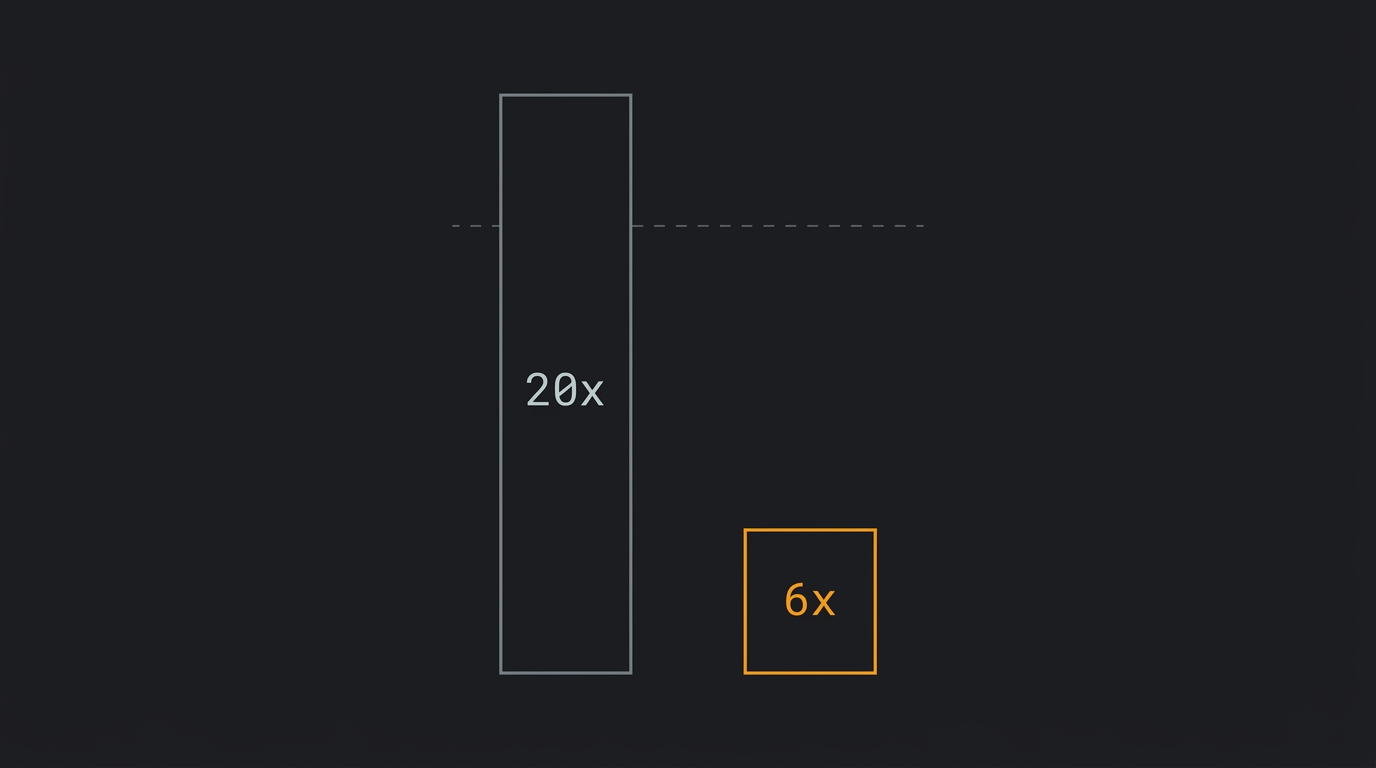
You pay $200 a month for a plan called Max 20x. The name says twenty times more usage than Pro. Then Thursday rolls around, you're in the middle of a refactor, and Claude Code locks up.
Again.
There's a class action in US federal court that says exactly that: the Claude Max 20x limit doesn't deliver twenty times the usage of the Pro plan. It delivers six to eight times, according to the lawsuit.
And the most interesting part isn't the accusation. It's the mechanism. Because once you understand how Claude's two limits stack, it stops looking like a scam and starts looking like what it probably is: a promise measured in one unit and billed in another.
Let's get to the facts, with sources.
What the lawsuit says
The case is Kahn v. Anthropic, PBC, number 3:26-cv-05763, filed on June 14, 2026 in the Northern District of California, San Francisco division. The plaintiff is Karl Kahn, a resident of Washington, D.C., and he's seeking class action status on behalf of every US consumer who has subscribed to a Max plan since launch.
The core allegation, according to Engadget, is short: "the actual usage provided by the Max 5x and Max 20x plans is far below the advertised amount of usage."
The numbers the filing puts forward:
| plan | price | promised | alleged in the lawsuit |
|---|---|---|---|
| Max 5x | $100/month | 5x Pro | ~3.5x Pro |
| Max 20x | $200/month | 20x Pro | ~6x to 8x Pro |
Look at what that does to the buying decision. If Max 20x really delivers 6x to 8x, and Max 5x delivers 3.5x, then you pay double to get less than double. The top tier stops being the obvious pick and turns into back-of-the-napkin math.
Kahn says that after upgrading, a single five-hour session ate 15% of his weekly allowance. Do the math: seven full sessions and the week is over.
The lawsuit also cites Anthropic's own internal communications from July 2025, which the plaintiff says contradict the public advertising — including a passage indicating that Max 20x would offer only 1.7 times the Sonnet hours of Max 5x.
Anthropic has not commented. The case is still active: the complaint was amended on July 20, and Judge Alex G. Tse issued an order relating cases on August 12.
One caveat that matters more than the scoreboard: this is an allegation, not a ruling. Nothing has been decided. What exists is a complaint with numbers and a few cited documents. Read it with the right yardstick.
What is the Claude Max usage limit?
Now for the part the lawsuit only brushes against, and the one that actually affects you.
Anthropic's official documentation defines the multiplier like this, in plain language, no wiggle room:
"Max 20x provides 20 times more usage per session than the Pro plan."
Hold on to those two words: per session.
Because there are two limits running at the same time, and they are not the same limit:
- Session limit — resets every five hours. This is where, and only where, the "20x" applies.
- Weekly limit — applies to all models, and resets at a fixed time assigned to your account.
The multiplier lives in the first one. What locks you out on Thursday is the second.
And that's exactly where the promise and the experience come apart. Not because somebody lied about the number, but because the number was measured over a five-hour window and your pain happens over a seven-day window. Those are different units. One ceiling doesn't scale with the other.
This isn't legal hair-splitting. It's the difference between "I can work hard for five hours" and "I can work hard all week." You bought it thinking it was the second.
Why Claude Code drains the same balance
There's an architectural detail that multiplies the problem for devs, and it's right there in the documentation itself:
"Pro and Max plans offer usage limits that are shared between Claude and Claude Code."
One balance. The chat in your browser and the agent in your terminal drink from the same tap.
And a terminal agent doesn't consume like a human typing. An /init on a monorepo reads dozens of files. A subagent doing a sweep opens a whole other conversation. A 1M-token context costs proportionally. Running three agents in parallel — which is the whole point of running agents — burns three times as fast.
In other words: the more you use the tool the way it was designed to be used, the faster you hit the ceiling that doesn't scale.
If that math interests you, we've already broken down the real price of Claude Code in 2026 with Pro, Max and API side by side, and the ways to stop burning tokens for nothing by breaking cache.
Do not just follow the news — master it. Hands-on AI Engineering, live, every week, in the largest community in Brazil.
Join the ClãHow do you remove the Claude limit?
Honest answer: you can't. There's no button, no hidden plan, no flag.
What you can do is cut consumption. And here it's worth separating what works from what's folklore:
Works:
- Don't break the prefix cache. It's the most underrated lever there is. Editing
CLAUDE.mdmid-session, switching models, reordering tools — all of it invalidates the cache and makes you pay for the entire context again. - Scope per task. A long session carries dead context. Close it and open a new one.
- Right model for the right job. Not every task needs Opus. Sonnet handles a good chunk of the CRUD.
- Measure before you renew. Run
/usageand compare it against what you actually shipped. Without a number, you're renewing on faith.
Doesn't work:
- Switching accounts to "reset." It violates the terms, and the weekly cap is per account.
- Assuming the higher tier fixes it. If the lawsuit's allegation is right, Max 20x gives you less than double Max 5x — for double the price.
Is the Claude Max 20x plan worth it?
It depends on a single variable: which of the two limits you hit first.
- If you hit the session limit — you work in short, intense bursts, stop, come back later — the multiplier works for you. The 20x is real inside the five-hour window. Upgrading pays off.
- If you hit the weekly limit — you run agents all day, every day — upgrading buys less than it looks like. You're paying for a dimension that isn't the one locking you out.
Figuring out which group you're in takes a week of observation, not a guess. Write down when the block hits: if it's in the middle of the day and gone in a few hours, it's session. If it's on Thursday and doesn't come back until Monday, it's weekly.
And if it's weekly, the way out probably isn't an upgrade. It's architecture: send mechanical tasks to a cheaper model, cut useless context, or move the heavy work to the API, which charges per token and has no weekly cap.
What is Claude's message limit?
Anthropic doesn't publish a fixed number of messages, and that's not bad faith: it can't.
Consumption is per token, not per message. A one-line question in an empty context and a one-line question in a 200-file repository are the same "message" and cost orders of magnitude apart.
That's why any "X messages per plan" table you find out there is a third-party estimate, not official data. Treat it as an estimate.
What can be stated with a source is what we've already covered: a five-hour reset on the session, a weekly cap across all models, a balance shared with Claude Code.
What this changes for you
Three things, and none of them depend on how the lawsuit turns out.
First: stop buying a multiplier and start buying the limit that locks you out. They're not the same thing, and marketing talks about the one that scales better on a slide.
Second: measure. A week of notes on when the block hits is worth more than any Reddit thread — including this analysis. Your usage pattern is yours.
Third: if the 6x to 8x allegation holds up in court, the discussion stops being about price and becomes about how capacity gets advertised in AI products. A number that only holds in one specific window, presented as if it always held, is a problem that goes well beyond Anthropic.
Anthropic hasn't responded yet. When it does, we'll update this post.
In the meantime, run /usage before you renew. It's the cheapest thing you'll do today.

{AI Engineer} — apaixonado por Laravel, arquitetura de software e construir produtos com impacto. Compartilho aqui tutoriais, descobertas e reflexões sobre o dia a dia de engenharia.
There is no shortage of content. What is missing is someone to untangle it: what matters now is how to implement it the right way. In the Clã you get that live, every week, with people who have already filtered out the noise.
Join the Clã